


Meningitis can strike anyone, anywhere, any time. It can take a healthy life in just 24 hours. Many of those who survive face life-long disabilities such as hearing loss, brain damage, limb loss or epilepsy, often requiring long-term care and support.
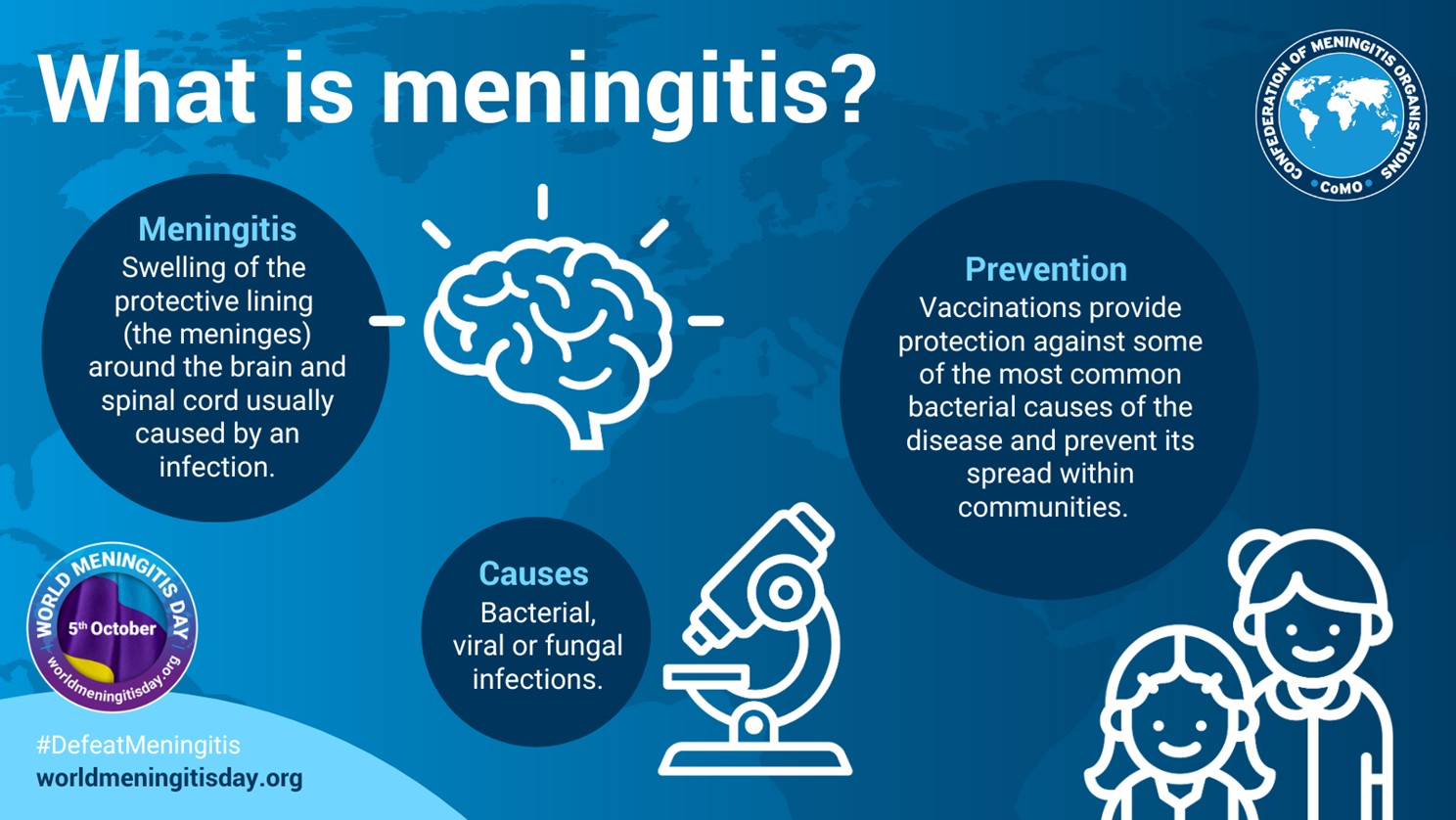
The illness can be triggered by a number of pathogens but is usually caused by viral or bacterial infections. Bacterial meningitis is more serious and can cause lasting damage. Immunisation can prevent several forms of meningitis, protecting against disability and death.
Impact of meningitis
- 2.3 million people are affected globally each year
- 1 in 6 people who develop bacterial meningitis will die
- 1 in 5 survivors of bacterial meningitis live with lifelong disabilities
- 40% of all deaths from meningitis are in children under five
The World Health Organization (WHO) has published a Global Roadmap to Defeat Meningitis by 2030. Among its goals are the elimination of bacterial meningitis epidemics and the reduction of cases of vaccine-preventable bacterial meningitis by 50% and deaths by 70%.
To mark World Meningitis Day, campaigners are calling for stronger action to protect against the disease. The Meningitis Research Foundation is also collecting 2,030 personal testimonies from people affected to keep the spotlight on the 2030 targets. As part of the Meningitis in your words initiative, people who have survived meningitis – as well as families who have been bereaved – are sharing their stories to raise awareness of the signs and symptoms.
- Olivia’s story: a school teacher who suffered profound hearing loss
- Oráin’s story: a parent recalls a devastating bereavement
- Théo’s story: a new beginning after losing his limbs
- Alice’s story: a university student has a lucky escape
Is there a meningitis vaccine?
There are multiple vaccines that help protect against meningitis. Different vaccines are required to protect against the different types of bacteria and viruses that can cause the illness.
For example, vaccines are available against certain types of meningococcal, pneumococcal and Haemophilus influenzae type b (Hib) infections. Measles, mumps and varicella (also known as chickenpox) viruses can, in rare cases, lead to viral meningitis and are all vaccine-preventable.
Know the signs and symptoms
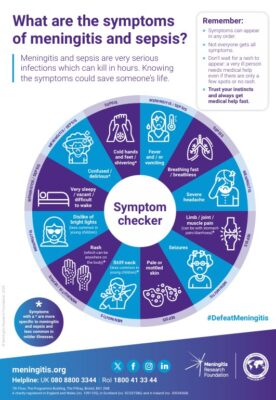
Even if you have had vaccines against some forms of meningitis, it’s important to know the symptoms of the disease. It might just save your life – or the life of a loved one.