



It’s a question of when, not if. That was part of the case made by scientists, governments and philanthropists when the Coalition for Epidemic Preparedness Innovations (CEPI) was launched in 2017. A serious epidemic or even a pandemic, experts argued, would arrive in our lifetime and the world needs to prepare. The rest is history.
Born in the wake of devastating Ebola outbreaks in West Africa, the Coalition embarked on a mission to accelerate the development of vaccines against emerging viral threats. Ebola killed more than 11,000 people between 2014 and 2016. It also had an enormous economic and social impact estimated to be in excess of €45 billion.

The Ebola case was just part of the story. There were other threats: Lassa, Nipah, Middle East Respiratory Syndrome (MERS) – all of which had the potential to cause serious outbreaks. That’s in addition to influenza which was – and is still – broadly seen as one of the most likely causes of future pandemics.
Investing in research, and in global capacity to develop and produce vaccines, would help to prepare against viruses that could cause large numbers of deaths, put pressure on health services, and disrupt economies. The case for preparedness was strong, but the threat of future outbreaks can sometimes feel distant and abstract – before becoming suddenly urgent.
In the decade since CEPI put together its first five-year strategy, the world has endured a painful lesson in the value of pandemic preparedness. For its part, CEPI was central to the Covid vaccine response and has now published its third five-year plan known as CEPI 3.0 (2027-2031).
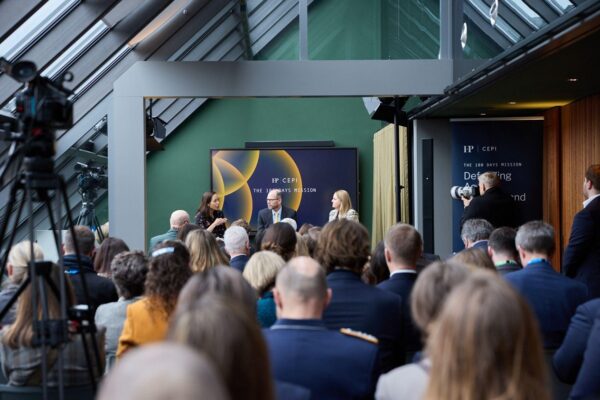
‘The Ebola crisis was the impetus for launching CEPI,’ recalls Willo Brock, CEPI’s representative to the EU. ‘Covid has created a whole new dynamic. A huge amount of learning has happened since CEPI launched and, as we look ahead, we’re focusing not just on how to respond to a crisis, but on how to prepare.’
The human, social and economic costs of Covid were felt around the world. The disease resulted in almost 15 million excess deaths by the end of 2021, costing as much as €12 trillion in lost output. The International Monetary Fund puts the likely cost of future pandemics at around €600 million each year.
‘There will probably be another major outbreak in our lifetime,’ Brock told Vaccines Today in an interview. ‘Experience tells us that response is more expensive than preparedness. That’s why we want to operationalise our 100 Days Mission – which is a kind of insurance policy against known and emerging threats.’
CEPI is raising funds to support its work on vaccines, technologies and networks that will put the world on the front foot when the next pandemic strikes. Whether the next major outbreak is caused by a new virus from an existing virus ‘family’, or something new, scientists around the world will need access to vaccine development and production facilities that can be quickly scaled up.
CEPI seeks to raise around €3 billion in total to fund its plans. Almost €1 billion has already been committed, with early movers including Germany who pledged at the World Health Summit last year.

The coalition has been making its case to governments and investors, pointing to its role in COVAX and the successful response to Rwanda’s Marburg outbreak. In the meantime, viral outbreaks continue to offer an unwelcome stark reminder of the risks.
‘Epidemics and pandemics are the humanitarian and health security challenge of our time,’ Brock says. ‘In the past year, we’ve seen local outbreaks of Nipah, Marburg and Lassa fever. And there have been Chikungunya cases in Europe. All of this shows that viral threats do not stop at borders.’
While the Covid pandemic focused the world on the devastation a pandemic can cause, it can still be challenging to secure funding for what amounts to a pandemic insurance policy.
‘This is a time of financial pressure, but the investment involved, while significant, seems reasonable on a global scale,’ says Brock. ‘Ten years ago, the idea of delivering a vaccine in one hundred days raised eyebrows. During the Covid pandemic, it took three hundred days from the identification of the pathogen to getting a vaccine into arms. We believe the 100-day goal is achievable, but only if we make the right investments now.’
Looking ahead, Brock says CEPI is well-placed to promote equitable access to vaccines and technologies in the case of a future emergency. The question of fair access to vaccines should be built into preparedness planning rather than determined in the heat of a crisis.
In some ways, the case for pandemic planning is the same as it was ten years ago. It’s a question of when, not if. The context, however, has changed dramatically. The burden of major outbreaks on individuals and society was grimly illustrated in 2020. The lesson of the most recent pandemic is that the impact of the next one can be managed – if the world invests in preparedness.
Read more: