



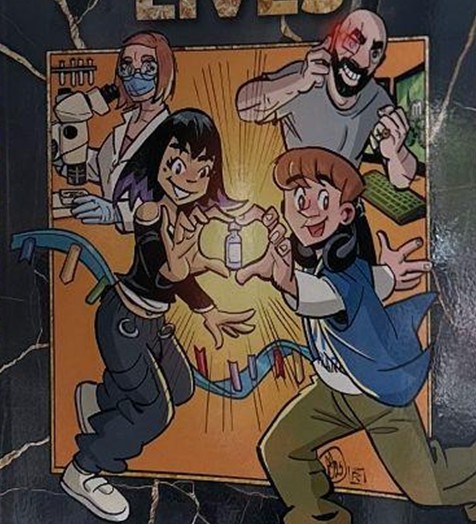
When an epidemic on a Pacific island sparks fears of a global pandemic, a heroic Belgian scientist with the help of Japanese colleagues scrambles to produce a vaccine within 100 days. Meanwhile, an evil industrialist aims to sabotage her work at every turn.
Fortunately, this is not breaking news but the plot of a fast-paced comic book called ‘Saving Lives’. The book is the fruit of a joint effort between Standaard Uitgeverij, a leading Belgian publisher, and experts at Vaccinopolis – the vaccine research hub at Antwerp University.
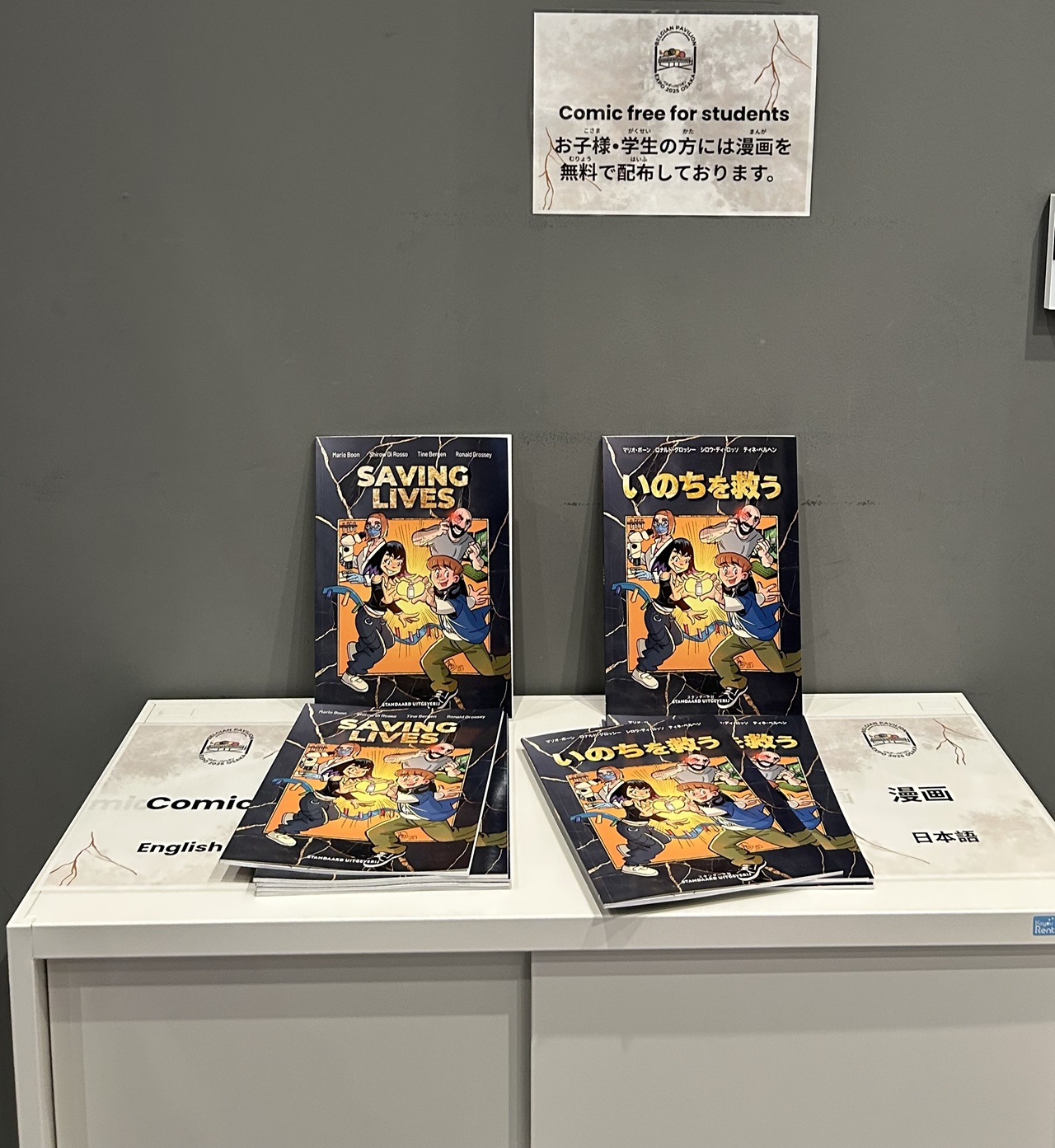
The book was on display at the World Expo in Osaka, Japan, last year. Officials at the Belgian Pavillion in Osaka also offered it as a gift to visitors as a way to highlight Belgium’s rich history of producing comic books as well as the country’s role in global vaccine development and production.
Origin story
The idea for a comic book about vaccines was sparked by one of the themes of the Expo which focused on health and wellbeing. The team behind the BelExpo Pavillion was looking for creative responses to this topic which were quintessentially Belgian. (Belgian chocolate and trappist beer were probably not going to work in this case…)
A collaboration was born when Standaard Uitgeverij paired up with Professor Pierre Van Damme to produce a story that was appealing to readers while being scientifically accurate. The team also needed to be mindful of how their narrative would translate to Japanese culture, as well as practical issues arising from producing a top quality multilingual book.
The biggest challenge was that – just like the scientists in the comic – the team were working to a tight timeline. They had just three months to write, draw, translate and print an original book, then ship it to Japan in time for the Expo – a process that usually takes six to nine months.
‘The first question was: Can we do this?’ recalls Christophe Van Driessche of Standaard Uitgeverij, who managed the project. ‘But we wanted to make it work, so we found someone to create a storyboard and brought in illustrators. The important thing was to ensure it was correct – the text, the images, everything.’
That’s where Prof Van Damme came in. Having previously proposed leveraging Belgium’s strength in comic design to highlight the country’s role in researching, evaluating and distributing vaccines globally, the Antwerp vaccinologist was ready to lend his expertise.
‘He was enthusiastic immediately,’ Mr Van Driessche told Vaccines Today. ‘Within a few days, he had sent feedback on the storyboard and our illustrator went to Vaccinopolis in Antwerp to inspire the drawings.’

For Prof Van Damme – who happens to love comic books – it was an opportunity to bring the story of vaccines to new audiences.
‘We frequently organise vaccinology symposia and develop information leaflets, but being creative can get the message across in a new way that connects with adolescents and adults alike,’ he says. ‘The Saving Lives comic shows Belgium’s contribution to global vaccination, but the story also touches on the threat of online misinformation about vaccines in a way that’s emotionally engaging.’
A delicate balance
The project needed to balance storytelling with science to ensure the comic was exciting as well as accurate. ‘Every page needs to end with some tension,’ Prof Van Damme says. ‘We wanted to show vaccines in action, but we also needed the reader to feel compelled to turn the page.’
Mr Van Driessche, who has also managed similar projects and collaborations with other health organisations and agencies, agrees. ‘It’s not always easy to bring in scientific detail while keeping a light pace that explains things in an accessible way, but it works very well here,’ he says.
Crucially, just like the scientists in the story, the team pulled together to deliver a complex project in the nick of time. The comic was completed by the Belgian team, before being printed in China and shipped to Japan – a cross-disciplinary and international collaboration brought to life in a matter of months.