

Did you know some cancers are caused by infections? For example, the hepatitis B virus can lead to liver cancer, while human papillomaviruses (HPV) cause most cervical cancers.
Vaccines protect against some of these infections, reducing the risk of cancer.
In fact, two years ago, European health ministers agreed to step up efforts to combat vaccine-preventable cancers. This followed the European Beating Cancer Plan in 2022 which aims to wipe out cervical cancer, and PERCH EU – an eighteen-country collaborative effort to increase HPV vaccine uptake.
Now, a new €25 million project is bringing together 69 organisations from 25 European countries in a Joint Action against infections that can lead to cancer. Known as SHIELD, it builds on the momentum of PERCH, and widens the focus beyond HPV and hepatitis vaccination, to include testing and treatment of HIV, hepatitis C and tuberculosis – all of which can increase the risk of cancer.
The consortium aims to increase vaccine confidence among the public and support healthcare professionals to deliver ‘tailored prevention, vaccination, testing, and care services’ to vulnerable populations. SHIELD is also working with the European Centre for Disease Prevention & Control (ECDC), which recently published a dashboard showing uptake of some vaccines up to 2024, to strengthen the monitoring of vaccination coverage at country level.
The initiative, largely funded through the EU4Health programme, is being coordinated by CHIP, the Centre for Health, Immunity and Infectious Diseases in Denmark.
Vaccines Today asked Dorthe Raben, Director of Public Health and Operations at CHIP, and Coordinator of the SHIELD Joint Action, how the project will address cancer-causing infections.
Vaccines Today: How did SHIELD come about?
Dorthe Raben: SHIELD (Strategies for Health Interventions to Eliminate Infection related cancers) is the outcome of a European Commission call for proposals to address the Council recommendations on vaccine preventable cancers.
Why is a Joint Action a good way to tackle this?
A Joint Action is a funding mechanism designed to stimulate governments at EU level to jointly address shared problems and the 69 partners were all nominated by the national health authorities in the 25 participating countries.
Infection-related cancers include a broad set of conditions. What is the idea behind grouping them together?
Although these infections are syndemic and often affect the same populations, they are frequently addressed in silos, both politically, administratively, and within health systems. Grouping them together allows us to take a more coherent, person-centred approach. Many of the affected populations face intersecting risks for acquiring several of these infections, so prevention efforts should be targeted at people rather than single pathogens.
By using a combination of prevention tools – vaccination, preventive treatment, testing, early diagnosis, treatment, and harm reduction – we can prevent multiple infection-related cancers in the same individual. This integrated approach is both more effective and more aligned with how these infections occur in real life.
How does SHIELD build on other EU initiatives?
SHIELD integrates learnings from PERCH and other previous initiatives and with strong links to other ongoing projects in the area, as well as coordination with ECDC and other relevant European organisations. At the same time, SHIELD goes beyond addressing a single disease, as in PERCH [which focused on cervical cancer], and aims to devise the most effective combined, integrated prevention tools to avert infection-related cancers.
What are the key topics that SHIELD will address?
SHIELD is working to reduce premature morbidity and mortality caused by cancers by devising comprehensive and effective biomedical prevention programmes for HBV, HCV, HPV, HIV and TB. It aims to identify and address structural barriers and increase awareness to increase uptake of HPV and HBV vaccination, and improve monitoring of HPV and HBV vaccination coverage in vulnerable groups. SHIELD also seeks to address disease-related stigma and discrimination and improve capacities of healthcare professionals to deliver culturally competent, effective, and tailored prevention, vaccination, testing, and care services for vulnerable populations.
What outputs are expected from SHIELD and how could these be used by healthcare professionals in future?
The expected outputs of SHIELD are:
- A simple multi-disease prioritisation model available for countries to apply in their own setting;
- A toolkit of evidence-based stigma reducing interventions, primarily for health care settings, implementing information campaigns to increase confidence in HBV and HPV vaccination and target interventions for increasing vaccine coverage in vulnerable groups;
- Cross-country uptake to demonstrate that SHIELD delivered something no single country could have built alone.
How might SHIELD raise awareness of cancer prevention and encourage behaviour change among the public?
SHIELD will work intensively on adopting the European Commission’s Communication model for building awareness and countering misinformation and disinformation on HPV and HBV vaccination to improve vaccine literacy among target populations.
At the same time, SHIELD will work on increasing vaccine confidence among healthcare providers through capacity building, including on delivery of culturally-sensitive care.
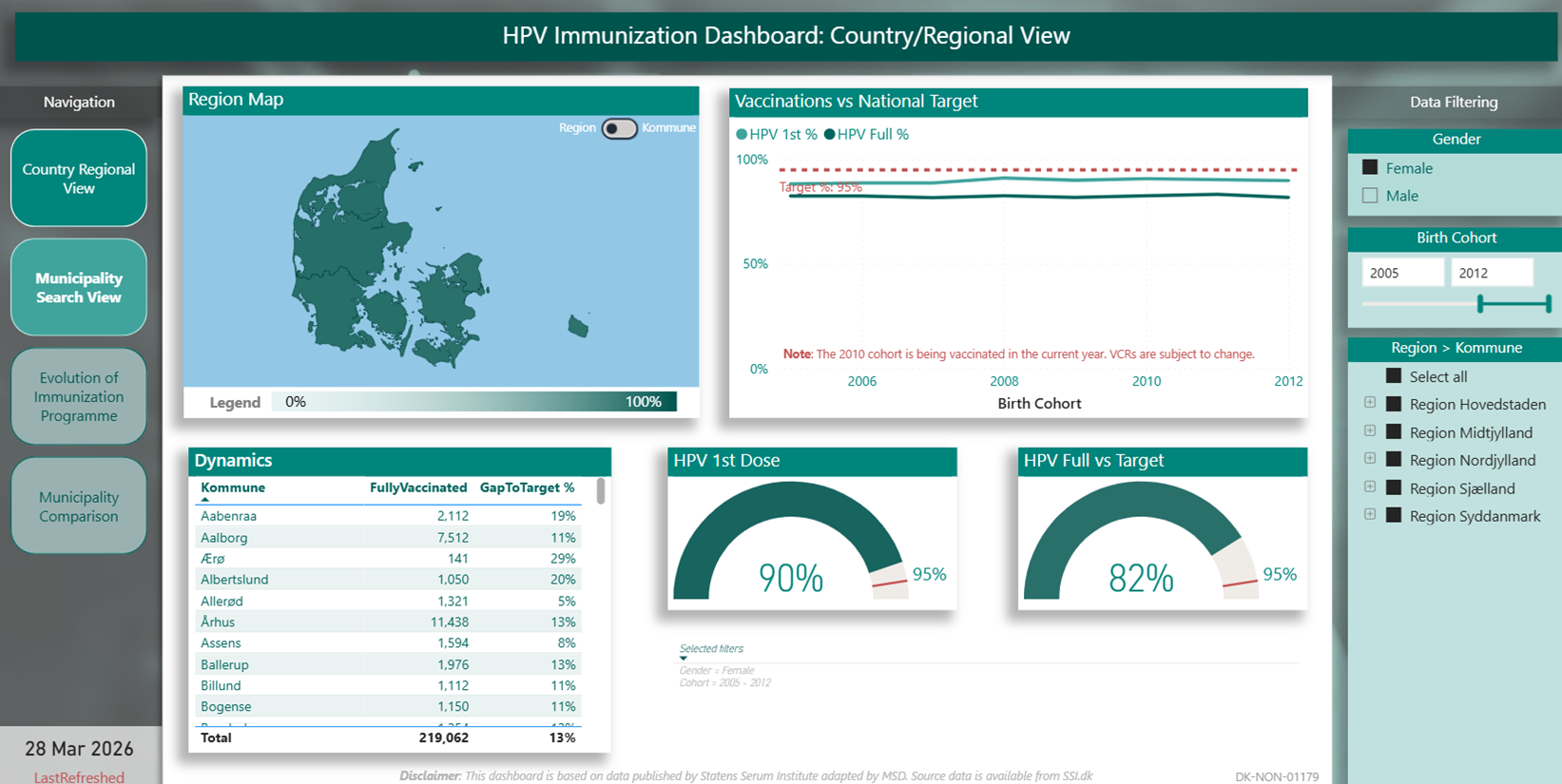
The ECDC has produced a new dashboard which shows HPV vaccine coverage from 2024. Lithuania has published a scorecard showing real-time coverage data – with individual coverage rates for each municipality, and Denmark also has an exemplary dashboard. Is this granular approach something that other European countries should aspire to?
SHIELD is working closely with ECDC on strengthening systems that can improve the monitoring of vaccination coverage at country levels.
As a first step, a survey among all SHIELD partners has gathered important information in SHIELD partner countries on vaccines registries and barriers in the countries that will be used to design activities and monitor progress in the lifecycle of the project the next 3 years.
Read more: