




Vaccines protect us against illnesses by prompting the body’s immune system to strengthen its defences against a specific bug (a virus, bacterium, parasite or fungi). Most vaccines are given as injections, except for nasal flu vaccines. However, many germs that cause diseases enter our bodies through places like the nose, mouth, or other moist surfaces called mucosal membranes.
This means that even though the body might fight off the disease because it has been trained to do so by the vaccine, a bug could enter the nose and then be spread to another person through coughing or sneezing.
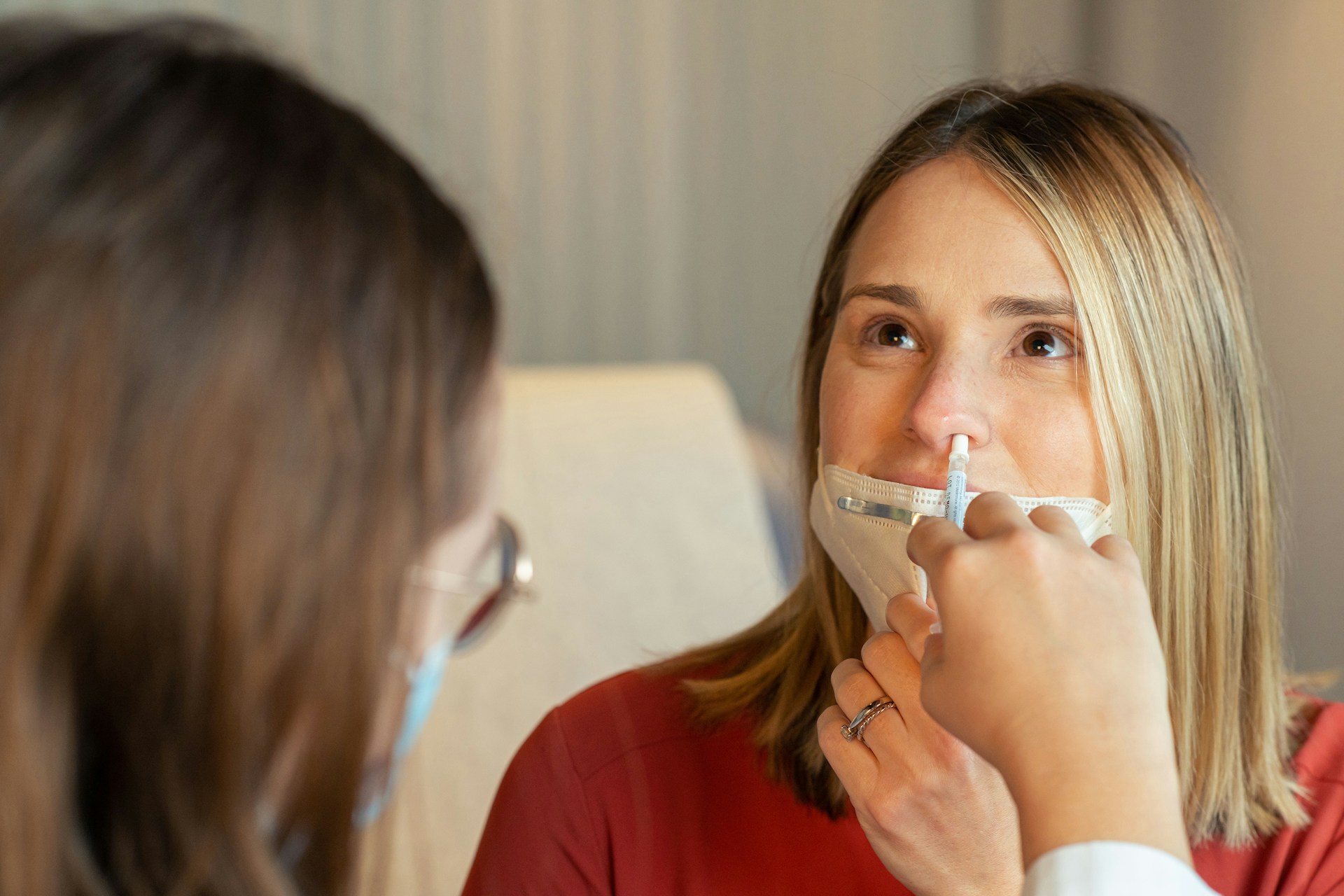
That’s why scientists in the NOSEVAC project, led by the European Vaccine Initiative (EVI), are exploring ways of giving more vaccines through the nose. It would also be relatively painless, potentially improving vaccine uptake – at least among people with a fear of needles.
‘Vaccines don’t usually stop transmission and that’s a big problem,’ says Dr Ali Harandi of EVI. ‘They prevent disease, but do not prevent infection and transmission. The overarching objective of NOSEVAC is to discover ways to elicit protective immunity at the point of entry.’
What is NOSEVAC?
NOSEVAC, coordinated by the European Vaccine Initiative (EVI), is an €11.6 million research project funded by the EU (EC, UKRI and SERI) that runs until April 2028. It is exploring how nasal vaccines could be developed to prevent infectious diseases – and reduce the spread of viruses and bacteria. It will mainly focus on two bacteria (Streptococcus pneumoniae and Bordetella), as well as influenza viruses, and SARS-CoV-2 – the virus responsible for COVID-19.
The 13-member consortium aim to:
- Identify how vaccines can provide long-term protection of the upper respiratory tract
- Develop technologies that allow vaccines to be delivered through a nasal cavity and elicit protection
- Understand the acceptability of nasal vaccination to the public and healthcare professionals.
The concept of nasal vaccines has been around for decades and a nasal flu vaccine is available in countries, including for children in Finland, the UK and Ireland. NOSEVAC aims to take this approach further by developing a versatile new platform using RNA technology which could then be adapted to protect against a wide range of respiratory diseases.
How vaccines work
Some common vaccines provoke an immune response by exposing the body to a weakened form of a virus/bacteria; some constitute an inactivated form of the bug; and others use a small piece of the bug – such as a protein. NOSEVAC researchers are looking at how mRNA could be used to trigger immunity.
Instead of injecting a protein into the body, the idea would be to introduce mRNA which contains a short genetic code (like instructions for the body’s cells) to produce a protein. The body then responds to the protein which it has made. This is the approach taken for some COVID-19 vaccines, except those vaccines were injected into muscle whereas the NOSEVAC team wants to find ways to introduce it through the nose.

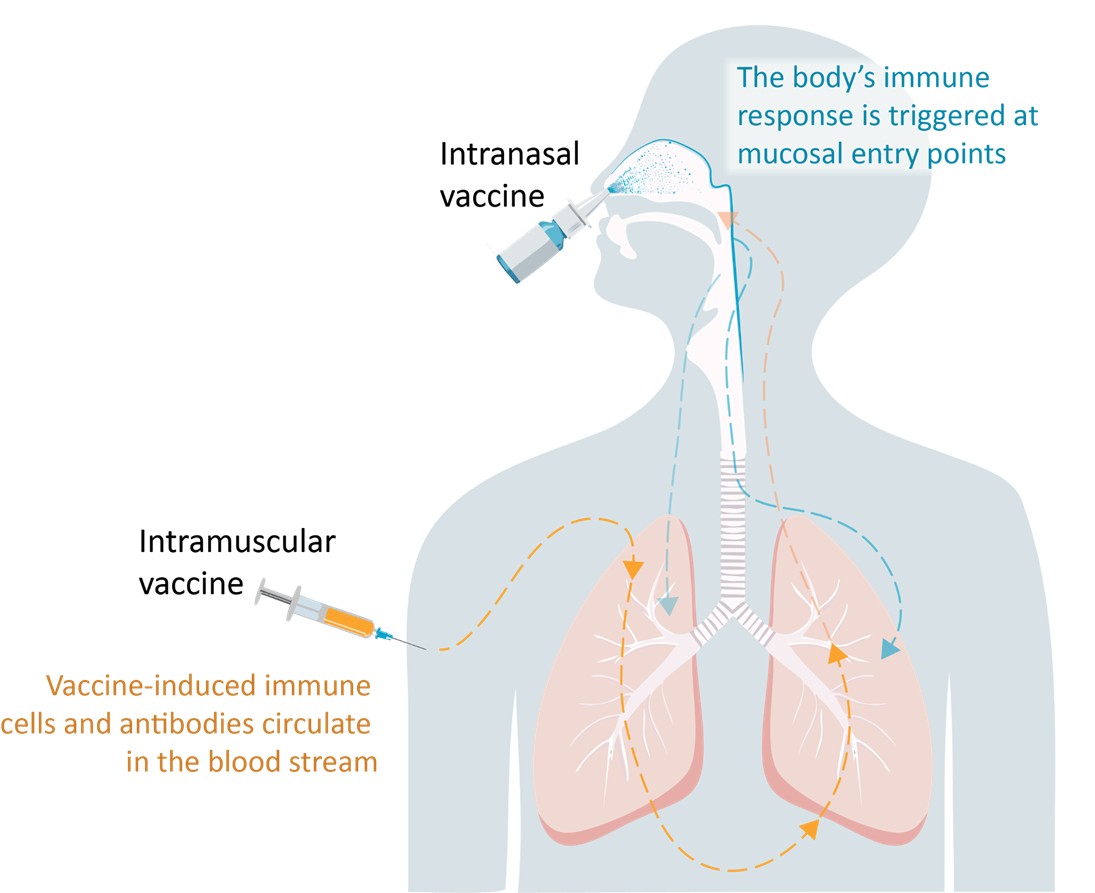
‘Our objective is to use a new RNA vaccine platform to see if we can deliver vaccines through the nasal cavity,’ Dr Harandi explains. ‘We are relying on the body’s machinery to make the protein to be presented to the immune system.’
Fragile: delivering delicate packages
Achieving this is far from straightforward. The key challenge is to find the right way to package up the mRNA so that it can be delivered across the nasal mucosa which lines the nose. This requires scientists to study everything from the tiny hairs that line the nasal cavity to the pH or acidity level of the nose.
‘We need to consider the microenvironment of the mucosal tract and ensure that the mRNA, which is very fragile, arrives intact,’ says Dr Harandi. ‘We are testing ways to encapsulate mRNA that will protect it and allow it to cross the respiratory mucosal barrier where it can deliver its cargo to the right target.’
To do this, researchers are testing potential solutions in the lab, using cells grown from the lining of a human nose. From there, they can study whether the potential vaccine provokes an immune response and whether there is an untoward inflammatory response.
A protective immune response would mean that the mRNA vaccine is working as hoped, but excessive inflammation could signal safety problems. The goal is to get the right balance. Safety concerns have held back nasal vaccines over the years, primarily due to the presence of nerve endings connecting the nasal cavity to the olfactory bulb (responsible for smell) in the brain.
‘Whatever you put in the nose may potentially reach the olfactory bulb due to its connections to the nervous system,’ he says. ‘The goal is to avoid heavy inflammatory responses while achieving an immune response. It’s about finding the sweet spot.’
Doctor nose best?
Ultimately, this approach could provide a basis for a wide range of vaccines to be given through the nose, either in several doses or as a booster for an injected vaccine. NOSEVAC researchers in France are currently running a survey to find out whether this would be desirable to the public and to healthcare professionals.
At present, the nasal flu vaccine is given by doctors and pharmacists who observe the recipient after vaccination, and there are no immediate plans for self-administration. However, this approach could reduce the burden on health professionals by making the process quicker, easier and more acceptable for public.
The NOSEVAC project runs until 2028 and could be followed by further research and clinical tests. If successful, it would not only offer a new way to deliver vaccines, but a more effective approach to containing the spread of respiratory infections.